LutraTV - Levin WWTP Upgrade Video Part 1
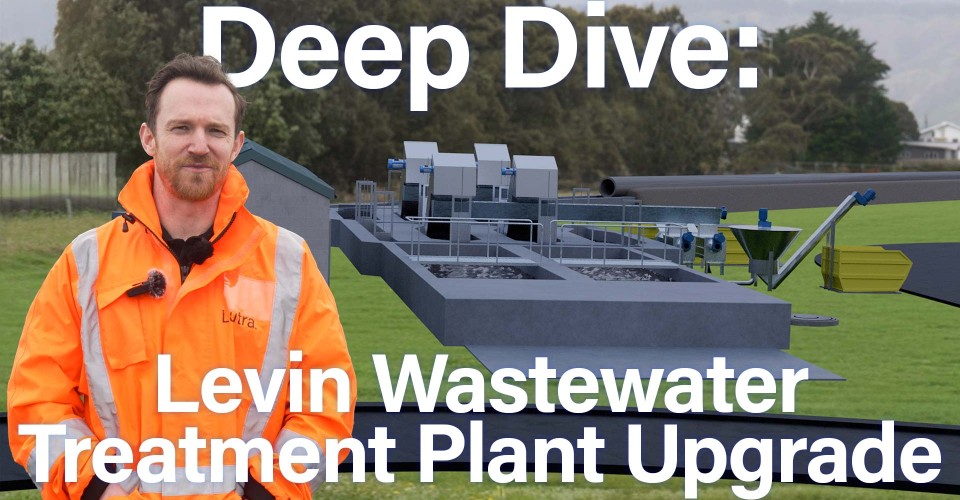
Preparing Levin Wastewater Treatment Plant for the Future: Inside the Upgrade Programme
At Lutra, we’re proud to work alongside councils across Aotearoa to help deliver robust, future ready water and wastewater infrastructure. One of our most significant ongoing projects is the multistage upgrade of the Levin Wastewater Treatment Plant, undertaken in partnership with Horowhenua District Council (HDC). This long-term programme sets the stage for reliable wastewater treatment that can support community growth, meet higher environmental expectations, and adapt to changing regulatory requirements.
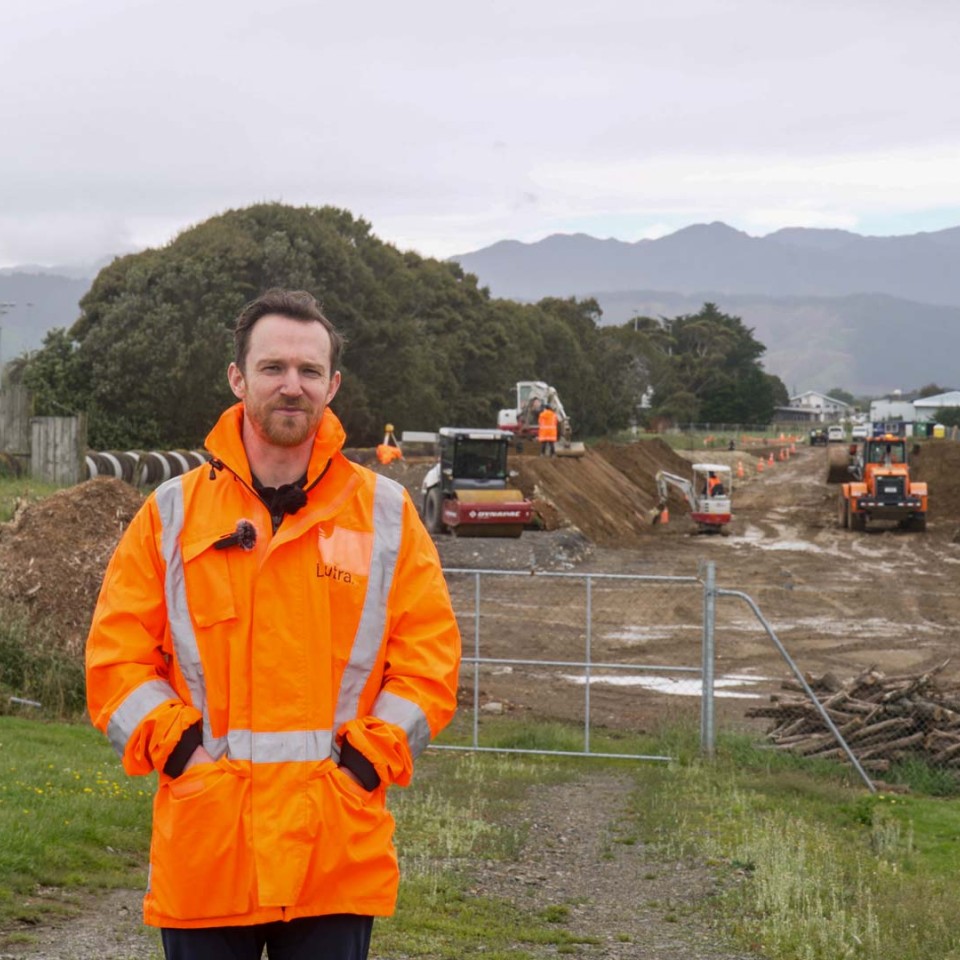
We visited the site with members of the operations and project teams to look at what’s happening now and what’s coming next.
A Master Plan for the Next 20 Years
Lutra began supporting HDC with the Levin masterplan in 2021. At the time, the Levin WWTP was facing several challenges, including compliance issues, aging assets, high operator demands, resiliency risks and lack of future treatment capacity. The masterplan was a central place to define and find solutions to these issues. The ultimate goal: come up with an investment strategy so that the plant can reliably serve the district into the future.
Early on, the master planning process tackled several key questions:
- Should the plant remain on its current site?
- What assets need replacing, and what needs to be prioritized?
- Should end‑of‑life replacement be reactive, or proactively staged?
- Should the assets be repaired, replaced, or upgraded?
- What level of treatment will be needed as regulations evolve?
- How can upgrades be sequenced to avoid redundancy as future standards change?
- What technologies should be explored, or ruled out?
This led to a clear investment strategy: upgrade almost every major process within the plant over the next 5–10 years, delivered through a series of discrete but interconnected work packages.
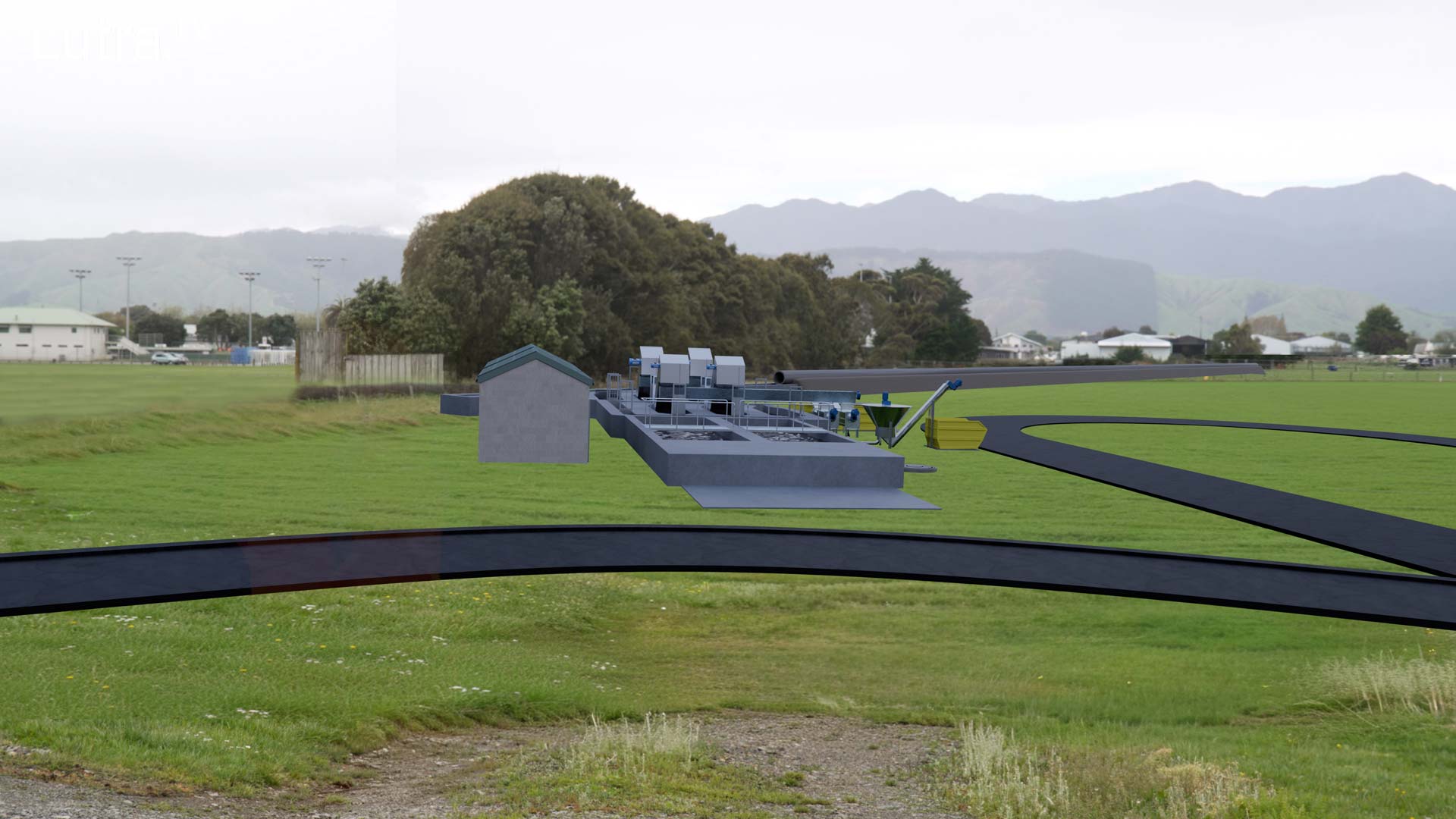
Phase 1: New Headworks to Protect Downstream Processes
The first major upgrade now underway is the construction of a completely new headworks facility. It is prioritized because:
- The headworks are essential—they remove coarse solids and grit, protecting all downstream equipment and extending the life of mechanical assets.
- The capacity and performance of the existing headwork won’t meet the future needs.
- A new inlet pipe which is under construction will be buried deeper, making the reuse of existing headworks almost impossible.
Once the headworks package was confirmed as top priority, Lutra completed the preliminary design and 3916 contract documentation, with the project planned to go to market for construction in 2026.
The new headworks will include:
- Two-stage screening
- A grit removal system
- A new influent lift pump station
- Connection to the new influent rising main currently being installed
By completing the headworks first, every subsequent upgrade—from clarifiers to biological treatment—will be safeguarded by modern preliminary treatment.
Planning for an Uncertain Regulatory Environment
The planning work continues with the new headwork construction.
Like many councils across the country, HDC faces a shifting landscape of environmental regulation. The Levin plant’s current discharge consent expires in 2045, but new national wastewater standards are expected before then.
Because of this uncertainty, flexibility has been a core design principle from the beginning.
The upgrade strategy ensures that:
- Investments made today won’t become obsolete.
- Major components can be expanded or adapted in future.
- The plant can respond to new nutrient limits or discharge conditions as they emerge.
This approach allows HDC to commit to staged upgrades now while keeping the door open for future enhancement.
Upgrading the Digesters and Sludge System
Contrary to conventional sequence that the liquid treatment takes priority over the sludge treatment, for this project, the sludge system upgrade is likely to be delivered before the secondary wastewater treatment. The rational includes:
- If the secondary treatment system is ugraded first, sludge production will double, leaving the existing dewatering plant overwhelmed.
- The performance and capacity issue of the existing sludge system.
- The structural risk identified on the huge concrete tanks.
- The scope of the work is less affected by the regulatory uncertainty.
- There is more regulatory uncertainty associated with the secondary wastewater treatment.
The site’s two anaerobic digesters play a critical role in stabilising sludge, but they vary significantly in age. One is approximately 70 years old, the other around 30, and they are both are showing deterioration.
The next steps include:
- Building a new third digester within the next 1–2 years
- Taking the oldest digester offline for refurbishment
- Retaining one digester as operational redundancy
- Upgrading the biogas handling system and boiler to optimise renewable energy use
These changes will improve reliability, safety, and sludge management capacity for the long term.
A new dewatering plant is also on the plan as the existing system will not meet the future demand, especially extra activated sludge from the secondary treatment.
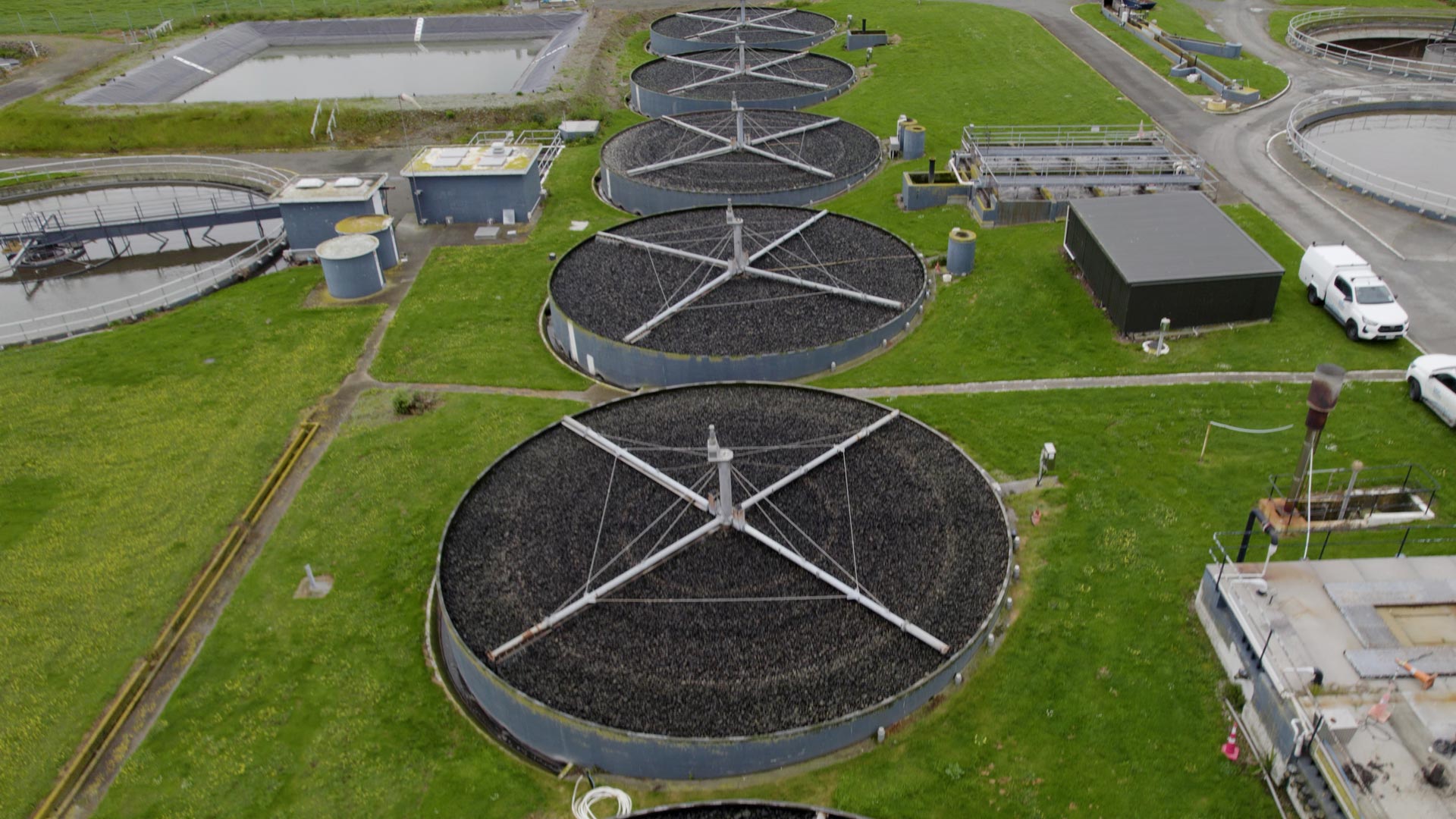
Replacing Ageing Trickling Filters with Activated Sludge
The plant’s existing trickling filters have served the district well for decades, but they are now nearing the end of their structural and operational life. They also cannot meet future nutrient reduction requirements anticipated under evolving wastewater standards.
Following extensive option studies, Lutra and HDC have selected a new activated sludge treatment system to replace the trickling filters. This will be built on available free land at the site, allowing the old system to keep operating while construction progresses.
When complete, the plant will feature:
- A new modern secondary treatment process
- Improved nutrient removal
- Greater resilience and controllability for operators
These upgrades are planned for delivery over the next 5–10 years.
The Operator Perspective: What Will Make the Biggest Difference
We also spoke with Tom, one of the treatment plant operators, about the practical challenges of running ageing infrastructure and what he’s most looking forward to in the new plant.
His top priorities include:
- Modern screens to improve performance and reduce maintenance
- Dedicated septage receiving facilities that allow for accurate monitoring of truck discharges
- Improved odour control to benefit both staff and the surrounding community
- Retiring the trickling filters, which are now structurally degrading
- More operational levers to manage varying loads, such as leachate from the landfill
Operators often bear the brunt of ageing assets, and the upgrade programme aims to make their work safer, easier, and more predictable.
A Thoughtful, Staged Pathway to a Modern Treatment Plant
Over the past several years, Lutra and HDC have worked methodically through master planning, decision‑making, and early enabling works. The result is a clear, flexible roadmap for transforming the Levin Wastewater Treatment Plant into a modern, resilient facility ready for the next generation.
As construction begins on the first major upgrades, we look forward to sharing more stories from the project team and showcasing the progress on site.